
God’s Hand for Good

Thoughts on life and faith after unexpected life changes at an advanced age
When our children are fighting with each other, we try to get them to understand the other person’s story. Understanding leads to empathy and then to compassion. Peter wanted Jesus to give him permission to withhold forgiveness.
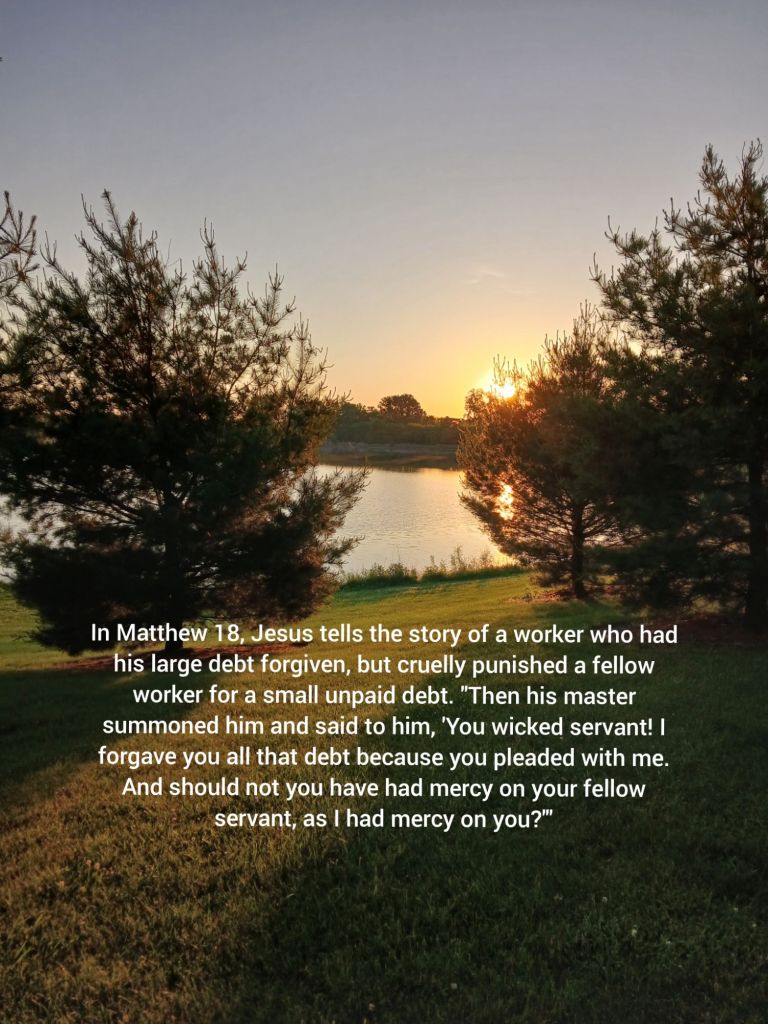
In Matthew 18, Jesus told the story of a worker who had his large debt forgiven, but cruelly punished a fellow worker for a small unpaid debt. “Then his master summoned him and said to him, ‘You wicked servant! I forgave you all that debt because you pleaded with me. And should not you have had mercy on your fellow servant, as I had mercy on you?'”
When the judicial system fails to meet our standards for justice, we are frustrated, especially when we have been personally impacted by the crime. Protestors often flood the streets with marches and signs when a verdict is deemed unjust. However, we have a completely different view when we are the offenders. Then, we want mercy and understanding.
Psalm 145:9 says, “The LORD is good to all, and his mercy is over all that he has made.” When someone offends us, we demand justice. When we offend others, we want mercy. God is able to be just and merciful at the same time and at all times. Given that we are often prone to reject God and thus sin, we must be thankful that His mercy is over us.

Lately, I have heard a lot about people claiming to be sovereign citizens when faced with law enforcement. Unfortunately for them, the courts have consistently held that these sovereign citizens are still subject to the laws of this country, its states, and its cities. Just because we may reject some authorities, it doesn’t mean we are still subject to governmental law enforcement.
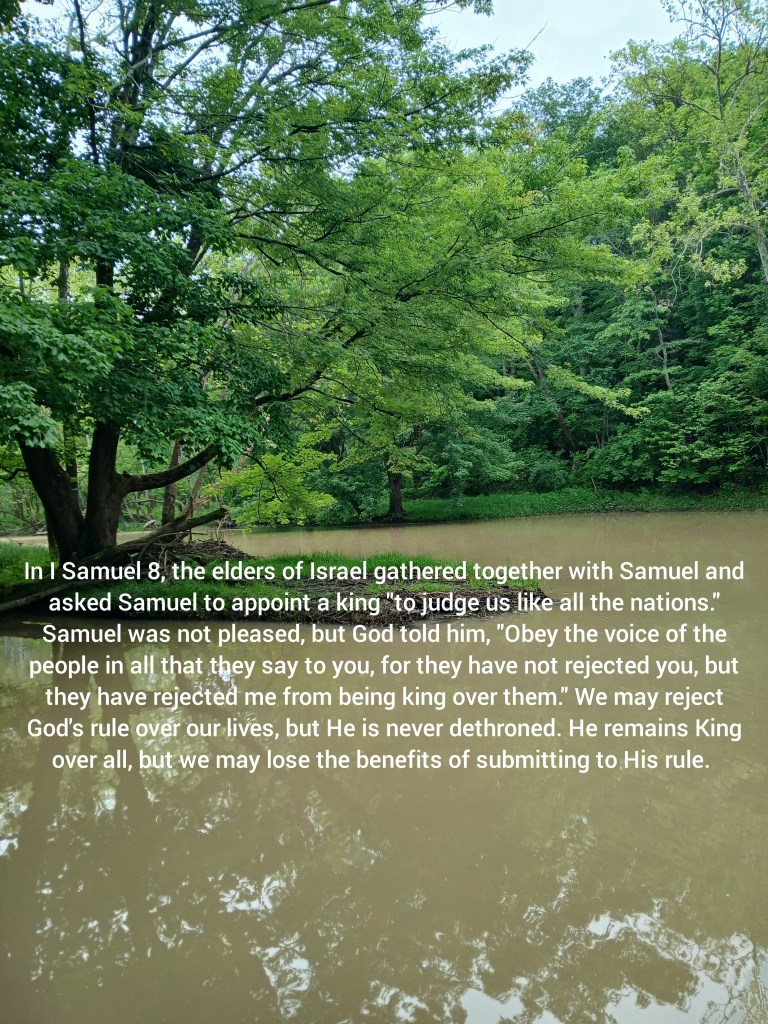
In I Samuel 8, the elders of Israel gathered together with Samuel and asked Samuel to appoint a king “to judge us like all the nations.” Samuel was not pleased, but God told him, “Obey the voice of the people in all that they say to you, for they have not rejected you, but they have rejected me from being king over them.” We may reject God’s rule over our lives, but He is never dethroned. He remains King over all. But we may lose the benefits of submitting to His rule.
Many times, I have spoken but later regretted either the words that I said or the way that I had said them. Other times, I have regretted speaking words that inflamed or did not speak the whole truth. I am not sure what I expect to happen at these times but it is never what I intended to be the outcome.
Isaiah 55:11 says, “so shall my word be that goes out from my mouth; it shall not return to me empty, but it shall accomplish that which I purpose, and shall succeed in the thing for which I sent it.” God is always faithful to His words. He never declares something and later regrets what He has said. His words will always accomplish what He has designed for them to do. Therefore, we can always trust in His words, especially His promises.

When people are trying to determine who did what, they must really seek only the truth. Whether it is the judicial system or a parent, we want witnesses and participants to speak the truth. We mustn’t put people in the position of speaking what they think that we want to hear.
I Kings 22:15-16 says, “And when he had come to the king, the king said to him, ‘Micaiah, shall we go to Ramoth-gilead to battle, or shall we refrain?’ And he answered him, ‘Go up and triumph; the LORD will give it into the hand of the king.’ But the king said to him, ‘How many times shall I make you swear that you speak to me nothing but the truth in the name of the LORD?'” Micaiah initially spoke what all the false prophets had told the king to comfort the king. The king saw right through Micaiah’s act and demanded that Micaiah speak the true message from the LORD. We must always speak the truth from God and not be swayed to appease the worldly.
Have a WordPress.com account? Log in now.

