

Bearing With Each Other
A Hard Virtue
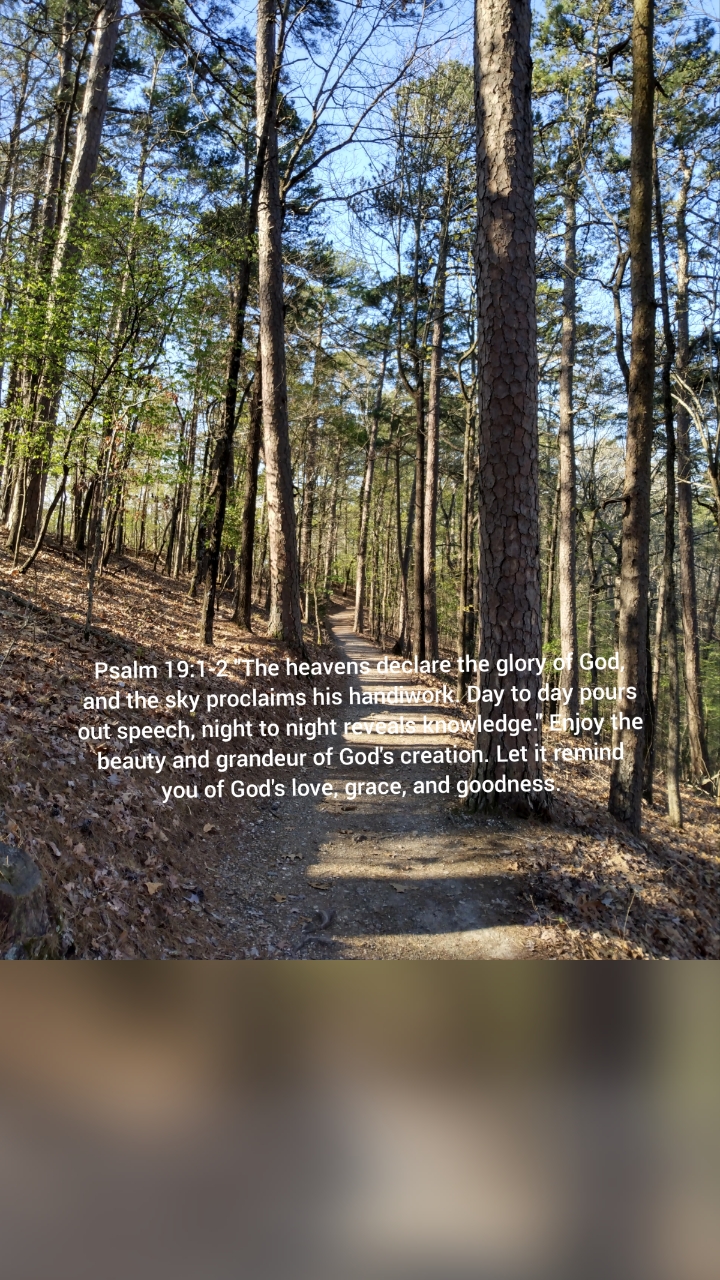
We are driving across the country right now. Even though the speed limit is 75 miles per hour in much of this part of the country, our progress seems slow and tedious. Patience is a hard virtue to possess and draw upon when needed. But waiting is just a small part of patience. This word also means bearing with each other’s failings. If I thought simple waiting is tough, bearing the burden of loving people through their mistakes and hurts is really difficult.
In I Corinthians 13 Paul wrote a beautiful description of love, often quoted in wedding ceremonies. It says, in part, “Love is patient and kind; love does not envy or boast; it is not arrogant or rude.”
Patience is the first quality of love listed by Paul. It doesn’t come naturally to us, but rather is developed through testing. God uses our experiences to teach us patience. It is only when we allow God to truly love others through us that we can actually possess and demonstrate patience.
The Ultimate Prize
Today I will achieve an objective that I have had for decades. When we go to the Texas Rangers game tonight, I will have been to a baseball game in every current Major League Baseball stadium. I have thoroughly enjoyed the quest. But this journey is not really an important one in the grander scheme of things.
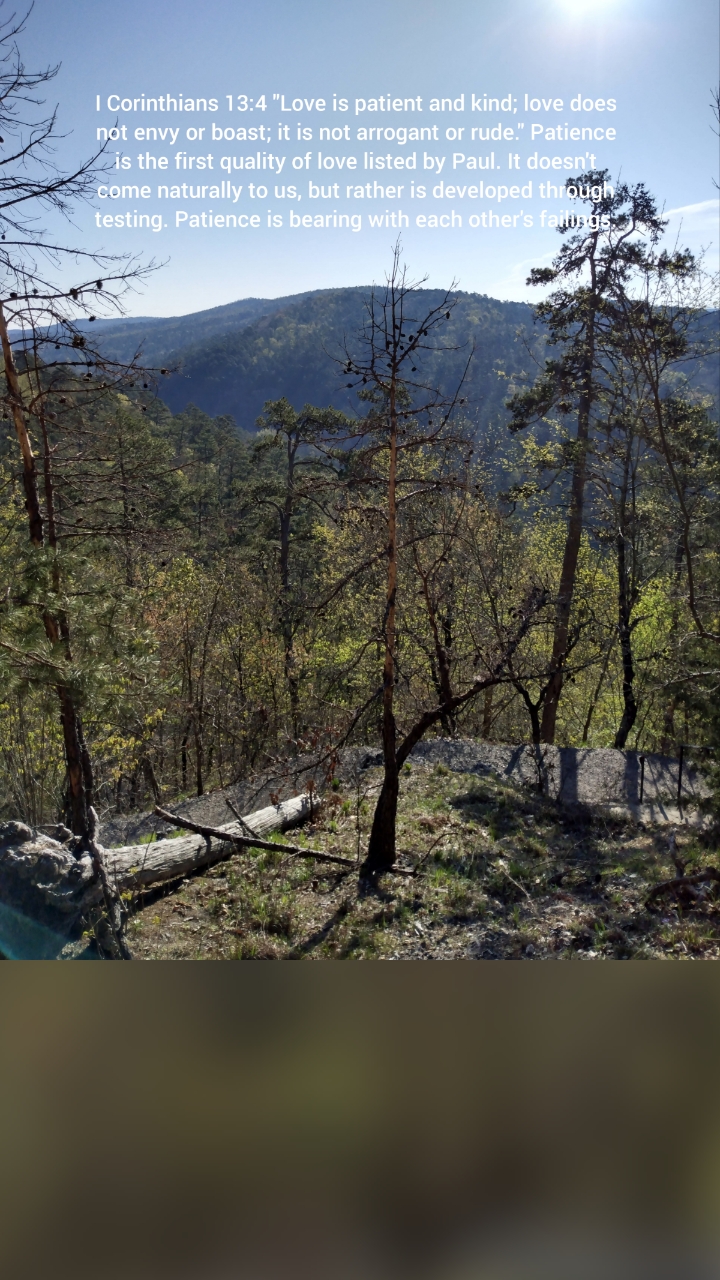
In I Corinthians 9:24-25 Paul wrote, “Do you not know that in a race all the runners run, but only one receives the prize? So run that you may obtain it. Every athlete exercises self-control in all things. They do it to receive a perishable wreath, but we an imperishable.”
We should make goals for ourselves and then exercise the self-control necessary to achieve our objectives. But instead of making self-serving goals, meant only to serve our desires, we should make goals that serve a greater good and have an eternal impact. Our primary goals should be to know God better and to become more like Him. These goals, when achieved, will make us better people who impact others in positive ways. Worthy objectives, indeed!
Run to Obtain the Prize
Lost in the Wilderness
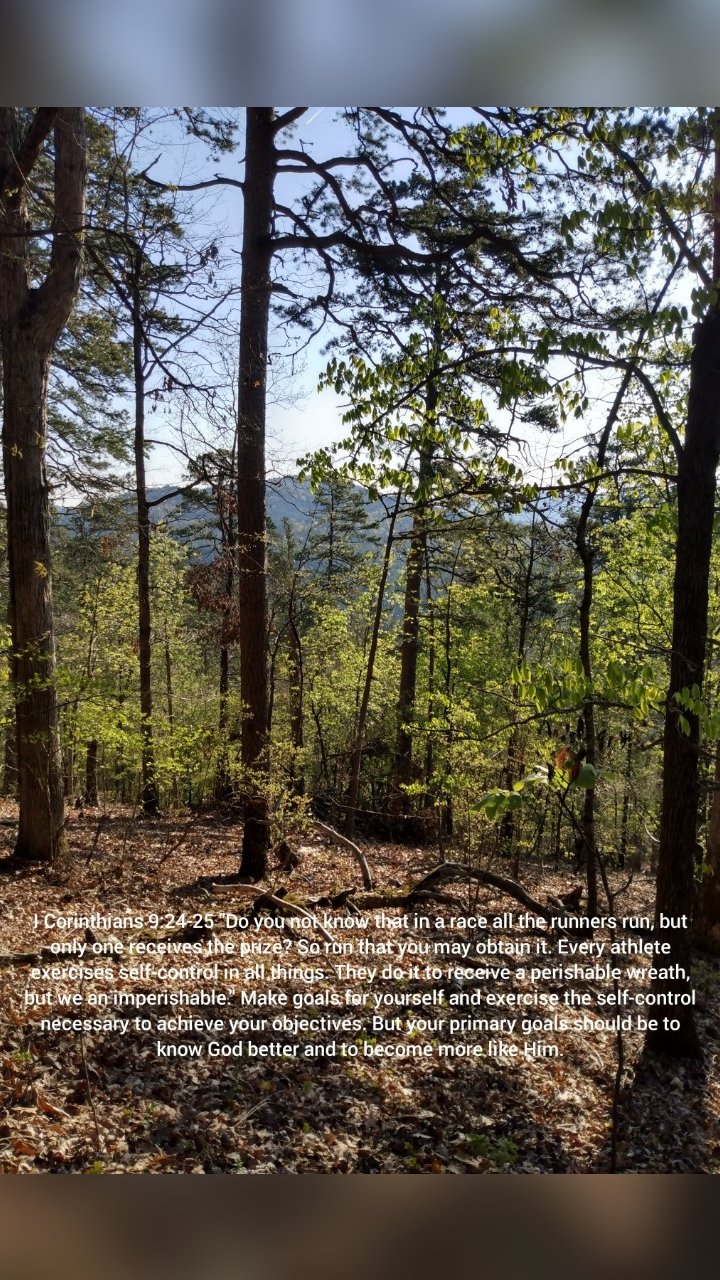
Today I had a bit of a frightening experience. I was hiking on a trail that was new to me. Suddenly the trail ended and no longer looked like the map. I made my way back to what I thought was the trailhead. I was hopelessly lost. I was able to get a message to my wife and a search party was sent. In a relatively short period of time they found me and I was rescued. Being lost in the wilderness is a lonely and frustrating experience. Although you want to return home, you need help to get there. When you finally are rescued, everyone celebrates.
You are probably familiar with the story of the Prodigal Son. Although his father was alive, this son asked for and was given his inheritance. He quickly squandered all that he had in self-destructive ways. Sometime later he decided to humbly return home in repentance. The father was eagerly awaiting his return and when he saw his son in the distance, he ran to the son, embraced him and said, “‘For this my son was dead, and is alive again, he was lost, and is found.’ And they began to celebrate.”
Jesus told this story to His disciples to illustrate our relationship with the Heavenly Father. We have all chosen to go our own way, which the Bible calls sin. In this state we have separated ourselves from God. We wander around in confusion and distress in our lost state. However, when we choose to come home to the Father and surrender to His tender mercies and steadfast love, He eagerly welcomes us home. In His grace and joy He celebrates the return of the lost son or daughter. Like the Prodigal, won’t you come home to your Heavenly Father?
Reason to Celebrate

Capture the Mountain
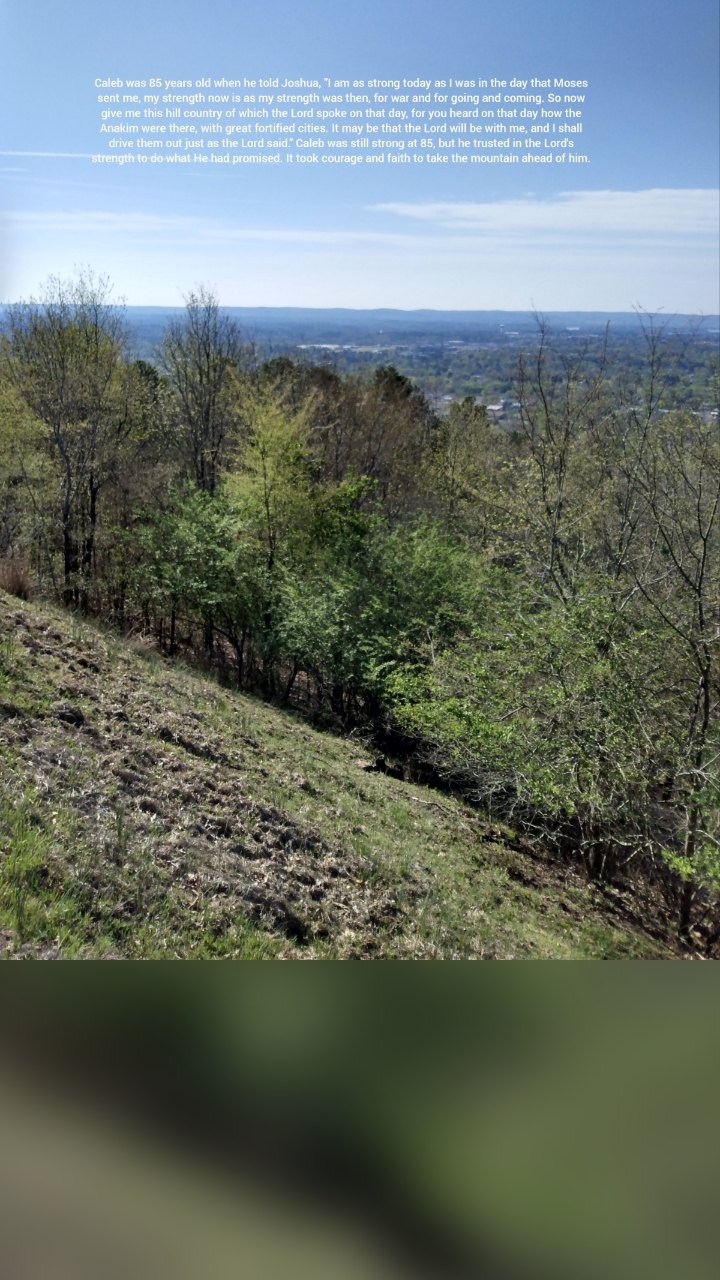
We have been spending a few days in Hot Springs, Arkansas. A lot of our time has been spent hiking trails in the Hot Springs National Park. Some of the trails are flat and easy. But since this national park is in the mountains, some of the trails feature steep inclines. When you are at the bottom of the inclines you have two choices. You can choose to turn around and go back to comfort. Or you can summon some courage and start up the trail. Although I am pretty old, I chose to go up the inclines. I was rewarded with beautiful scenery.
Caleb was 85 years old when he spoke these words to Joshua, “I am still as strong today as I was in the day that Moses sent me, my strength now is as my strength was then, for war and for going and coming. So now give me this hill country of which the Lord spoke on that day, for you heard on that day how the Anakim were there, with great fortified cities. It may be that the Lord will be with me, and I shall drive them out just as the Lord said.”
Caleb had already survived 40 years of wandering in the wilderness with his people. Then he fought with them for 5 more years. Now he wanted land for his family. He chose the most difficult land. It was hill country filled with giant people in well fortified cities. But Caleb had God’s promise that the land would be his. Although Caleb was still strong, he trusted that God’s strength would fulfill the promise. When we face a mountain of trouble that seems impossible to summit, we should trust in God’s strength to get us over the top of our struggle. Let’s not turn back toward comfort from our trouble, but rather move up the mountain in the strength of God.
Caleb’s Strength
Gone Too Far
A car dangerously cuts in front of another driver in a hurry. The offended driver steps on the accelerated in rage so as to cut off the offender. A customer comes into a fast food restaurant. But her food is not prepared to her liking. She becomes loud and abusive and winds up slapping the innocent worker behind the counter. A student is bullied for a long time in his high school. In a secret pact with a friend, they gather weapons for their tragic revenge on anyone who gets in their way. Where will the cycle of offense and revenge end?
Romans 12:20-21 says, “To the contrary, if your enemy is hungry, feed him, if he is thirsty, give him something to drink, for by so doing you heap burning coals on his head. Do not be overcome by evil, but overcome evil with good.” It is our natural instinct to seek revenge when we are wronged. But revenge is its own form of evil and generally enlarges the cycle of offenses and revenge. It is far more effective to overcome evil with good. We can do this by trusting God to judge evil. He knows and empathizes with our hurts. God calls us to leave vengeance to Him.
 Reluctant Retiree